

Chưa có sản phẩm trong giỏ hàng.
Technology News
How Does a Heart Rate Sensor Work?
A Heart Rate Sensor is one of the most widely used technologies in today’s health monitoring and fitness devices. From smartwatches and treadmills to gym exercise bikes, most of these devices are equipped with this sensor to help users monitor workout intensity and optimize performance. So how does a heart rate sensor work? What components does it include, and how is it applied in practice? Let’s explore the details in the article below with Vietgear.vn.
1. Operating Mechanism of a Heart Rate Sensor

Currently, there are two main technologies used to measure heart rate:
a. Optical Sensor (PPG – Photoplethysmography)
This is the most common type found in smartwatches and home fitness devices.
Working principle:
-
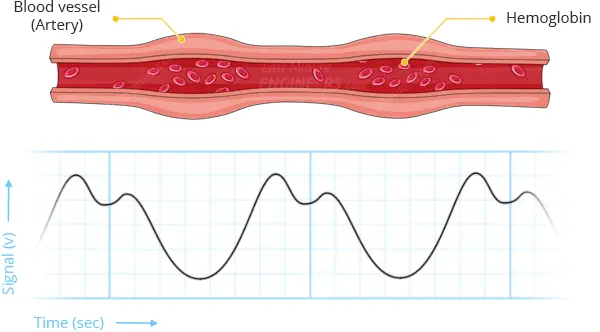
An LED light (usually green) shines light into the skin.
-
Blood absorbs light differently than the surrounding tissue.
-
When the heart beats, blood volume changes with each pulse → the level of light absorption changes accordingly.
-
A light sensor (photodiode) detects the reflected light.
-
A microprocessor analyzes the signal fluctuations to calculate beats per minute (BPM).
Simply put, a PPG sensor measures changes in blood flow beneath the skin with each heartbeat.
b. Electrocardiography Sensor (ECG – Electrocardiography)
This type is more accurate and is commonly used in medical devices or professional chest-strap heart rate monitors.
Working principle:
-
The heart generates electrical signals each time it contracts.
-
Electrodes placed on the skin detect these electrical signals.
-
An amplifier circuit processes the extremely small signals (in microvolts).
-
A microprocessor converts them into heart rate data.
Because ECG measures the heart’s electrical activity directly, it provides higher accuracy than PPG, especially during high-intensity workouts.
2. Main Components of a Heart Rate Sensor
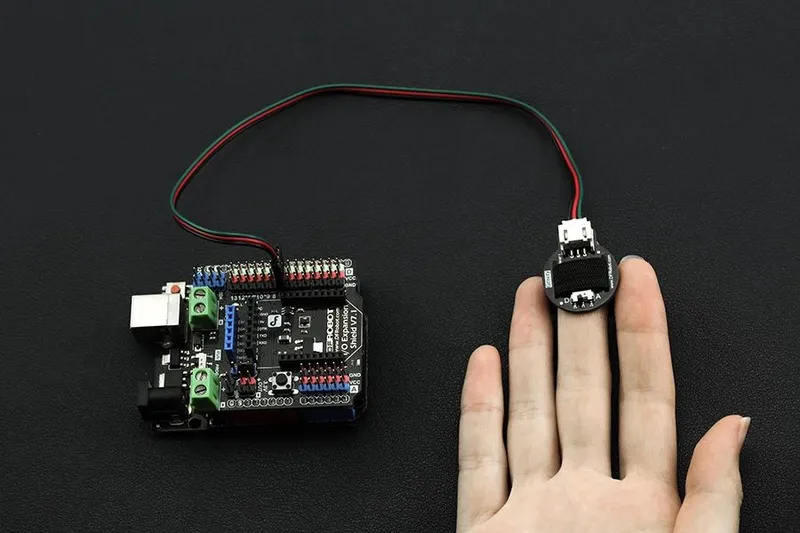
A standard heart rate sensor module typically includes:
- LED Light Source: A green LED is commonly used in PPG sensors because this wavelength is well absorbed by hemoglobin in the blood.
- Photodiode (Optical Sensor): Detects the light reflected from skin tissue and blood vessels.
- Signal Amplifier: The captured signal is very weak and noisy, so an amplifier circuit is required to boost the signal and reduce noise.
- Filter Circuit: Removes interference caused by motion, ambient light, or vibrations during exercise.
- Microcontroller (MCU): Processes the analog signal → converts it into digital data → calculates beats per minute (BPM).
- Power Supply Circuit: Provides stable voltage to the entire system, typically using a lithium battery or a DC power source from the exercise device.
3. Basic Electronic Diagram of a PPG Sensor
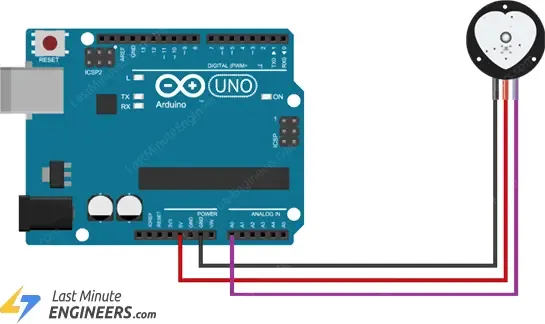
A simple block diagram typically includes the following stages:
LED Light Source → Skin Tissue → Photodiode → Amplifier Circuit → Signal Filter Circuit → ADC (Analog-to-Digital Converter) → Microcontroller → BPM Display
Signal flow explanation:
-
The LED emits light.
-
The photodiode converts the reflected light into an analog electrical signal.
-
An op-amp amplifies the signal.
-
A low-pass filter removes high-frequency noise.
-
The ADC converts the signal into digital form.
-
The MCU calculates the heart rate cycle.
-
The result is displayed on the screen or transmitted via Bluetooth.
In modern devices, this entire circuit can be integrated into a dedicated IC such as the MAX30100 or MAX30102.
4. Fitness and Sports Equipment Equipped with Heart Rate Sensors

Today, heart rate sensors are widely integrated into:
-
Smartwatches
-
Fitness trackers
-
Professional chest strap heart rate monitors
-
Treadmills
-
Elliptical machines (full-body trainers)
-
Rowing machines
-
High-end massage chairs with health monitoring features
In gyms, many cardio machines are equipped with simple ECG sensors integrated into metal hand grips. When users hold the handles, the system measures their heart rate and displays it directly on the screen.
5. Why Are Heart Rate Sensors Important During Exercise?
-
Help control workout intensity (Zone 2, Zone 3, etc.)
-
Prevent overtraining
-
Optimize fat-burning efficiency
-
Track endurance improvement progress
-
Detect potential heart abnormalities
Thanks to heart rate sensor technology, workouts are no longer based solely on subjective feelings but become more scientific and precise.
Heart rate sensors operate based on two main principles: measuring changes in blood flow (PPG) or detecting the heart’s electrical signals (ECG). The system includes an LED, photodiode, amplifier circuit, filter, and a microcontroller for data processing. Today, this technology is widely integrated into fitness equipment and wearable devices, enabling users to monitor their health more accurately and effectively.
Author: Do Lan MKT
Bài viết liên quan

